Wednesday, July 27, 2011

A Most Excellent Day!

From the diary of Elihu Jenkins, aide-de-camp to Vice President Schuyler Colfax.

April 27, 1870
Today has been a most excellent day! My esteem in the eyes of my august employer grows steadily, and I dare say that as my responsibilities multiply, my presence will shortly become more pronounced throughout the District....

...still, I dasn’t presume to engage in any kind of banter with Mr. Colfax. While he is a jovial man, and most kind, the vice president has made it clear that my place, while of value, is situated considerably below his own station. I am, at present, content with this situation....

...As I continued to fumble through the scattered correspondence  that lay siege to the right side of Mr. Colfax’s desk, a feeling of great anticipation came over me. Could it be? I thought to myself. Have my ears been bewitched by my overly-active imagination? I cast a sideways glance toward Mr. Colfax, who reclined slightly in his wooden desk chair.

The vice president regarded me with some amusement as he stroked his bushy beard with his fingers.

“You heard me well, Jenkins,” Colfax said. “I mean to press the issue with President Grant on the morrow, and you will be the bearer of my message. I have waited long enough for an appointment with the old general! I would have you diligently pursue this matter with his chief assistant to a satisfactory conclusion.”

Great Jehoshaphat! I shall visit the Presidential Palace, perhaps even to meet the Great Man himself!
###


Postscript: What the hell was that? Excellent question. The text above is an attempt at Flash Fiction, directed, in particular, to the Three Word Wednesday blog. It may also be read in tandem with The Adventures of Schuyler Colfax: Vice President!

Monday, July 25, 2011

The Adventures of Schuyler Colfax: Vice President!

Based on recently discovered diaries penned by the 17th Vice President of the United States (1869-1873). Said diaries were discovered in a storage closet at the Odd Fellows Hall in South Bend, Indiana.

April 28, 1870: A Troubling Discovery!

"Good morning, Mr. Vice President!"

Schuyler Colfax lowered the newspaper he was reading, folded it in his lap, and turned his head to regard his visitor.

"Jenkins! A hearty good morning to you as well," said the Vice President. Colfax smiled. His man Jenkins, he assumed, brought him good news from the Executive Mansion. But as he studied the younger man's face, he could see that the smile was fraudulent.

"What say you, Jenkins? Has President Grant acted on my request?" Colfax rose from his chair and began to pace the wooden floor of the modest house he occupied with his wife, Ellen, and Schuyler III. The Vice President was a patient man, but he had been waiting six months for an appointment with the Chief Executive to discuss important matters of state.

"I'm afraid I bear disappointing news, sir," Jenkins began. Colfax regarded him carefully. Jenkins was the best aide-de-camp he had employed during his time in the District. If he bore bad tidings, Colfax was certain that Jenkins himself was not at fault.

"Mr. Vice President, I did indeed travel to the Executive Mansion this morning, as per your instructions," Jenkins said. He paused, almost as if he had lost his train of thought. "It was a glorious sight to behold, the mansion shining white on a luxuriant lawn of green grass...a sight you, yourself, sir, have gazed upon many a time over these years of public service."

Colfax nodded, urging him to continue.

"I knocked on the front door to announce my presence, as the hour was early. Though I bided my time upon the front step, no answer was forthcoming from inside. The door, I discovered, was unlocked, so after much deliberation I let myself into the interior."

Curious, Colfax thought, as he stroked his full, luxuriant beard with the fingers of his right hand. The old general liked to have an armed guard detailed to the mansion's entrance. An unguarded door? Curious indeed.

Jenkins was perspiring, the vice president could see. The aide turned toward the open window near Colfax's reading chair, pulled a laced handkerchief from his vest pocket and mopped his brow.

"I walked inside that stately White House, Mr. Vice President, and it was the strangest thing: a great stillness befell the hallways of the great manse," Jenkins said in a low tone. "Had the day not been clearly in the ante-meridian, I would have thought myself a night-time intruder in that place.

"As I made my way slowly through the foyer, I called out: 'How now! I bear important tidings for President Grant himself!' But there was no reply. I continued on in the direction of the President's offices, as you have sent me there on business previously and I remembered the route.

"At one point, I heard a low moaning sound issuing from a place I could not identify. And, still, no one came to greet me...."

Colfax exhaled loudly, as he was wont to do in troubling situations. He hooked his thumbs in his vest pockets before speaking.

"Most unusual, Jenkins. Most unusual. But what of President Grant?"

Jenkins swallowed hard, and reached out to steady himself against a sideboard table under the window.

"When I approached the Great Man's offices, the door was ajar! Though I was most fearful of invading his privacy, or intruding on the inner workings of state, I pushed the door open. I stood in the hallway and again announced my presence, through the open doorway.

"No answer was forthcoming, so I stepped inside. The tableau that greeted me was - oh, sir! Would that I had never seen it!"

The vice president's alarm grew.

"Out with it, Jenkins! What of Grant? Am I to exercise my Constitutional duty?" Colfax exhaled loudly again, and cast an expectant gaze on his aide.

"I...I can scarcely describe what I saw, sir." Jenkins voice was barely above a whisper now, his eyes cast toward the floor. "There were bodies everywhere, and at first I thought a great murderous rampage had made its ugly mark. I saw men in uniform laying on the floor all around me...women in various stages of undress, some with their ankles clearly visible to me. Toward the back of the room, I could see President Grant, still seated in his chair, but slumped over his oak desk.

"But they were not dead! I observed that there were a great many empty glass bottles scattered among the slumbering masses, and then the olfactory evidence accosted me...."

Colfax recoiled in horror.

"Demon rum? No!"

"Whiskey, actually, sir. At least, that's what the empty bottle clutched in President Grant's hand appeared to be."

There it was. The ugly, unfortunate truth. Colfax, being a man of the world, was surprised and disheartened at the news. He knew, however, that he must put on a brave facade for the sake of young Jenkins, who must be devastated by the revelation.

"You must be strong, Jenkins," Colfax said slowly. "I am afraid that President Grant - our Commander in Chief - is a most intemperate man!"

Jenkins swooned, falling back into the vice president's reading chair.

"But sir! How can it be? The Savior of the Union? The Victor of Appomattox?" Jenkins buried his face in his hands. "What will we do?"

Colfax reared back and slapped Jenkins, hard, across the face.

"Pull yourself together, man! Tell me: how did you leave the scene? Are you known to anyone there?" Colfax knew that word of President Grant's intemperance must not be made known to the public, lest the Union suffer.

"No sir!" Jenkins rose from the chair, his employer's slap returning him to the moment. "I quickly left that grim office, and searched the rest of the mansion for signs of some consciousness. I found many more, in the same condition as before, and just as many empty bottles. As I made my way back to the front door, so as to escape this hellish scene, I found an opened letter on the floor which explained everything.

"Yesterday was President Grant's birthday, sir. The celebration of that milestone seems to have exceeded the bounds of common decency."

Great Jubilee! Colfax exclaimed to himself. How is it that I was not invited?

"Jenkins! Have the carriage brought around. I wish to ride out into the country, and let the sweet natural breezes clear my head. Only then shall I decide what to do next."

Next week: A Day in the Country

Wednesday, July 20, 2011

Elusion

I can hear the music but I can’t tell where it’s coming from maybe a violin but the sound is faint and the quality is not good so I’m really not sure and I don’t have an ear for music anyway it’s hot in here I feel like my skin is burning even though it’s dark when I was a kid I felt like this that time I had chicken pox but you can’t get them again can you whatever happened to that purple bicycle I had haven’t thought about that bike in years garage sale probably handlebars had glow in the dark tape on them my hair would blow in the breeze pedaling full speed around the block as if monsters were chasing me and they might have been I had a lot of hair in those days everyone wore it long my ears didn’t feel sunshine for many a summer but it never prevented me from hearing all the music if I reach as far as I can really stretching my arms maybe I can touch the sound bring it closer and identify just what it is I’m hearing did I leave the radio on when I’m alone I do that sometimes because solitude is not my favorite state of being it’s funny even if I don’t want to talk to people which I don’t sometimes I still like to have people around which makes me the world’s worst party guest at times but that’s better than being a chatterbox who rambles on and on about politics god I hate to talk politics but I can tune out the voice noise and then I hear the music again no it’s not a violin but some other stringed instrument reminds me of that processed elevator music which I hate and which is now all I can think about my ears popped in the elevator we kept going up up up I was six and it kind of freaked me out you could feel the elevator cables jiggle how long does it take to get to the top floor anyway dad I want to get out now listen to the music son we’re almost there OK that wasn’t so bad and look at that view I can see for miles and the people down there are so small I’m on top of the world do we have to go already my son plays the violin maybe he’s practicing in his room but he never practices he could be really good if he would when I played the trumpet in junior high I practiced after school but I was never very good no rhythm at all is it brighter all of a sudden like the sun rising brighter now everything is red alarm clock it’s the alarm clock.

Slowly I sat up in bed, reached over and turned off the alarm. Had I dreamed? Fleeting images dripped slowly off my consciousness in the early moments of the day, just beyond my grasp. I hummed as I headed to the shower.

###


Postscript: What the hell was that? Excellent question. The text above is an attempt at Flash Fiction, directed, in particular, to the Three Word Wednesday blog.

Monday, July 18, 2011

Outstanding in My Field (of Fire)

Have you ever seen a big grass fire, up close? Waves of heat shimmer as you try to look across the burning expanse, obscuring far-off details that aren't already hidden by the smoke. The smell of charred grass gets in your nose, like someone spilled something on the charcoal in your backyard grill.

During my newspaper days there were a couple of big grass fires that I was sent out to cover. I didn't take any notes; there wasn't a lot of information available at the scene. Grass is on fire, and, maybe, other stuff. Take pictures!


I gained a lot of respect for the firefighters, of course. Fighting fires is dangerous work, and many of the men I spoke to told me that they feared grass fires more than any other kind. It was the wind, that abundant Oklahoma wind, that made fighting grass fires unpredictable. And dangerous. A crew could be in the middle of a field, pushing back the fire line, when a change in wind direction or intensity could leave them suddenly surrounded by flames.

As a novice reporter/photographer, I didn't know all that yet. My first lesson in the unpredictability of a grass fire came when I returned to my car after shooting photos for an hour. Arriving on the scene, I parked on the grass shoulder of the road. When I returned, the grass was blackened within 2 feet of my front bumper.

I'd like to say I learned my lesson right then, but a couple of years later my zeal for getting a great photo made me do something stupid.

We heard the call on the police scanner in the newsroom: a wheat field was on fire, out near the federal prison (I have a good prison story I'll save for another day). I grabbed my camera and headed to the scene, where I parked a respectful distance across the road from the blazing wheat field.

It was a large field, and all the firefighting action was out in the middle, several hundred yards from where I stood. So I hopped the fence and waded out into the shoulder high wheat, determined to get closer.

By the time I got close enough to start snapping pictures, the fire fighters in their brush pumper trucks had it under control. Suddenly, my right eye still at the camera's viewfinder, I remembered.

The wind.

I lowered the camera and looked around me. For a hundred yards all around me, I was surrounded by wheat stalks almost as tall as I was. If the wind had changed, if the fire wasn't quite under control, I could have been roasted before I could run back to the road.

Gulp.

One of the brush pumpers drove in my direction and made a slow turn. I could see it was from the prison. They let non-violent inmates serve as volunteer firefighters. I waved. One of them waved back. Then they squirted me with a hose, turned, and drove back to the prison gates. I stood there for a moment, decided I was grateful, and headed back to my car.

###

Postscript: I'm pretty sure none of the photos I shot in the wheat field came out. The photo above is from my first grass fire, the one that almost claimed my car. It ran on the front page of the El Reno Daily Tribune.

Thursday, July 14, 2011

Good Time Baseball: Adam 89er, and the One Sport They Played at All Sports Stadium

 "Bee-yuh!"
"Cold Bee-yuh!"
For many years, that loud refrain was the true voice of summer baseball in Oklahoma City. If you watched the Oklahoma City 89ers in the 1970s and 1980s, you knew who Adam 89er was.

Adam was the old guy who sold beer at All Sports Stadium. Every night he would push a cart filled with ice and "bee-yuh," back and forth on the walkway between the box seats and the upper reserved seats.

I got to watch him in action close up in the summer of 1979, when I got my first job: ballpark vendor.

I was 15 (underage) when I interviewed for the job with Mike Cox, who was the son of 89ers owner Patty Cox Hampton and in charge of concessions at the ballpark.

This was, I thought, the greatest job a guy my age could possibly have. Free admission to the ballpark. Every night.

Cool!

My primary job was to fill up wire racks with cups of Pepsi, and sell them in the stands. They had rigged a handle that opened six taps at once, so you could fill up an entire row of the rack at a time. Then you had to slap lids on all the cups, and try not to spill anything. Sticky work.

As I walked up and down the steps and aisles of the ballpark, I would rather timidly say, "Pepsi. Who wants Pepsi?" I was kind of shy, and I didn't holler like I should have, but I reasoned that anyone in the stands who could see me had to know what I was selling. In spite of myself, I sold a lot. Especially when my parents came to a game early in my career. Every time I walked by, my dad would order another drink; I knew he hated Pepsi.

I was too young to sell beer, but I watched and followed the beer vendors. They knew how to belt it out - Adam 89er was, however, in a class by himself. When Adam was selling "bee-yuh" everyone in the ballpark knew it. He was good natured, always joking with his customers, and he seemed very Yoda-esque.

One of the first lessons I learned was to never buy popcorn at All Sports Stadium. My first night on the job, they put me in a dank concession kitchen and had me pop popcorn during the entire ballgame. Being a lightly-attended Thursday night game, we sold very few boxes, so the boss had me scoop all the remaining popcorn into big black trashbags and store them in a walk-in freezer. Then the team went on a week-long road trip. First game back, they had me sell that now-stale popcorn in the stands. One guy threw his popcorn at me the next time I walked by his seat.

I tried to stick with Pepsi after that.

The team's marketing slogan in those days was "Good Time Baseball!" And it was a good time. All Sports Stadium was state of the art when it opened in 1962, and it was still a decent park, though a little down in the heels, the summer I worked there.

The named it All Sports Stadium, after Oklahoma City's All Sports Association, which had been instrumental in its development. Over the years the name became a kind of running joke; some even called it One Sports Stadium.

It was nothing fancy; a concrete bowl dug down into the side of a hill at the State Fairgrounds. The general admission sections featured wooden bleachers painted blue. The reserved seats were blue metal folding chairs.
But there was an awesome hill down the third base line, and every game it would be swarmed with kids running, playing, and rolling down it. There was no upper deck, no outfield seating.

The 89ers were the Triple A affiliate of the Philadelphia Phillies in those days, and while the Phillies were good, the 89ers rarely were. We did have some notable players come through during that period - Keith Moreland, Bob Dernier, Ryne Sandberg, Lonnie Smith, Julio Franco come to mind. Of that group, only Moreland and Smith were on the 1979 roster - a team managed by Lee Elia, who would go on to infamously manage the Chicago Cubs and insult all their fans.

The stands were rarely full, but there were a number of colorful "regulars," including a guy who would play a bugle until he got too drunk to pucker his lips.
I only recall one sellout during my summer at All Sports - the 89ers played the Phillies in a July exhibition game. It was a weekend afternoon game, with temperatures seemingly near the boiling point. There were so many people there that the mezzanine was practically impassable from the crowds in line at the antiquated concession stands. I would emerge from the concession area with a rack of Pepsis and sell them all before I walked 10 feet. I don't remember seeing any of the game.

It was a great job, but it was only a one summer gig. Years later, when I worked as a reporter/photographer for the nearby El Reno Daily Tribune, I went back to All Sports Stadium to do a feature on Adam 89er.

Adam met me at the ballpark one evening, a couple of hours before the game, and told me his life story. He played for the St. Louis Stars in the Negro Leagues briefly, and he met Babe Ruth. He told a lot of stories, some of which I'm pretty sure he made up. And he let me follow him around and take some pictures.

Walker was actually featured in the Oct. 8, 1985 edition of the Weekly World News as the "Offspring King." The article credited him with 16 daughters, 12 sons, 98 grandchildren, 41 great-grandchildren, and four great-great-grandchildren.

Clearly he did more with his time than sell beer.

When Oklahoma City's MAPS project funded a new downtown ballpark in the mid-1990s, All Sports Stadium closed. I visited it one last time, a couple of years later, when the American Cancer Society held a Relay for Life there. Grass had overgrown the infield dirt; huge weeds sprouted from the warning track. It was a dried out husk. All Sports Stadium was dead, and Adam 89er was long gone.

Before I left for the last time, I went to the top of the third base hill, yelled "bee-yuh" and rolled down it one last time.

Good Time Baseball.

###

Postscript: I took these photos to accompany a feature story I wrote for the Northwest News, a tabloid-format paper that the El Reno Tribune owned for a few years in the late 1980s in an effort to broaden their reach into northwest Oklahoma City. In the third photo, Adam 89er is accompanied by one of his many grandchildren.

Wednesday, July 13, 2011

The Delicate Balance of Time and Fate

Or, Never on Wednesday


Gerry Anders hated everyone on Wednesday. Indeed, he was an equal opportunity hater. Barista. Bus driver. Secretary. Boss. Friend. Those who knew him best tried to avoid Gerry on Wednesdays; even a polite “hello” was not an option halfway through the week.

No one knew why Gerry became such an abhorrent troll once a week, and, truth be told, Gerry didn’t really understand it himself. It was as if all of his frustrations, fears, and biases - his dark clouds that he kept bottled up six days a week - automatically boiled over like clockwork. Perhaps it was internal pressure control, stroke avoidance.

“Idiots!” Tucked away in his work cubicle, Gerry cut loose on a contractor whose work was behind schedule. In most offices, heads would have turned at the harshness of the raised voice, but this was “Gerry being Gerry.” He was tolerated here, because the quality of his work was high, his value to the firm outweighing a single day of Hell each week. They gave him a wide berth, going so far as to post a lookout while he was in the breakroom to warn the innocent away.

Was it Fate that decreed he would meet the woman of his dreams on Wednesday? At the very least it could be chalked up to mundane bad timing; Sarah Jones rescheduled her Tuesday visit to Wednesday to accommodate an emergency trip to the dentist.

Sarah Jones did not exactly light up a room when she entered. No one would describe Sarah as anything like vivacious, bubbly, or even beautiful. What Sarah possessed was a deep well of kindness in her soul, the kind of inner beauty often ascribed to a saint. She believed in love at first sight, though she hadn’t seen it yet. She believed that everyone on Earth had a soul mate, if only they could find each other.

Sarah’s friend Jessica told her about a man with whom she worked. He had his rough spots, she told Sarah, but he was smart, efficient, and even kind of charming if you caught him on the right day.

“Just drop by the office and I’ll introduce you to Gerry,” Jessica pleaded with her friend. “I think you’d like him; he could be the one for you, Sarah. But come on Tuesday....”

In hindsight, Jessica regretted not emphasizing the day of the week more clearly to Sarah.

Sarah stood on the carpet just outside her friend’s cubicle for almost a full minute before her presence was felt. She smiled her kind, somewhat naive smile, exuding...well, goodness.

“Hey, Jess, I got held up yesterday, but I’m here now,” Sarah said. “Where’s this guy you want me to meet?”

Jessica’s eyes grew wide.

“Oh my God! Not today! This is not a good day to be here, Sarah!”

And then, like a cold shadow, Gerry stood behind Sarah.

“What the Hell is all this noise, Jessica! My cubicle is right there, and I can’t get anything done if you’re entertaining guests all morning!”

Maybe Sarah misread the fear and panic in Jessica’s eyes. Maybe she thought Gerry was kidding. She liked guys who were good kidders.

“Don’t worry about it, Gerry. She and I were just leaving....”

“No, we’re not!” Sarah said brightly. She turned to face the source of Jessica’s fear. “So you’re Gerry? I’ve heard a lot of nice things about you.”

For a moment, Gerry was silent. Did indecision slow his reply? Was there a glimmer of his six-day-a-week humanity, struggling to self-edit?


No.


Listen, lady. I am up to my neck here, trying to keep this crappy place afloat, and the last thing I need is an overly-cheerful moron like you distracting me!”

What a bastard, Sarah thought, her smile flattening. Casting a hurt look at Jessica, she turned and strode toward the elevators. In a moment, with a ding, Sarah was gone. Silence smothered the maze of cubicles. Wednesday played out like it always did around Gerry Anders.

On Thursday, he cried.

###


Postscript: What the hell was that? Excellent question. The text above is an attempt at Flash Fiction, directed, in particular, to the Three Word Wednesday blog.

Thursday, June 30, 2011

A National Primary: The Cure to Iowa and New Hampshire

I don’t like to argue politics, but this is an issue that’s been bugging me, and it’s really not a Democrat vs. Republican argument.

It’s time for a national primary to select our candidates for President of the United States. Think about the current system: a bunch of idiots in Iowa and New Hampshire basically control who we will be able to vote for in November. Is it fair to rest the nation’s future on how a candidate shakes someone’s hand in a cornfield, or how well they tip a coffee shop waitress? Are the people of Iowa and New Hampshire especially wise? Do their needs jibe with ours? I say no.

Presidential preference primaries were a 20th-century creation, an effort to give more of a voice to the common voter and stem the influence of party bosses. Methods might differ from state to state, but the end result was a slate of delegates to the national party conventions - where the party bosses could still make deals in smoke-filled rooms and nominate someone else.

Conventional wisdom in today’s presidential politics says that a candidate must do well in Iowa - or New Hampshire - to have a chance at that party’s nomination. Just think about that for a minute. How stupid! Why Iowa and New Hampshire? Why not South Dakota and Delaware? It makes no sense when you begin to question the current set-up.

None of this, mind you, is spelled out in the Constitution. The parties have been making and changing the process since the 1820s. Nothing about primaries, or conventions for that matter, is sacred. So let’s change it!

As with most things in modern society, the undue influence of money and media has warped the political process. Many would argue that without the primary system, the less-well-funded candidate doesn’t stand a chance to get his or her message to the voters. But does a candidate without a big war-chest stand a chance in the current system? Let’s not kid ourselves.

Here’s what we should do:

1. Let’s take the television money out of the equation. Paid political ads will only be allowed during a two-week period leading up to the national primary (and, later, the general election). Every qualifying candidate gets the same amount of commercial time. I think France does this. Direct mail, telephone banks and personal appearances are permissible before, during, and after that two-week period.

2. We need a qualifying standard for candidates to participate in the national primary. Do they need to qualify in all 50 states? I say no, because that would eliminate the less-well-funded candidate. What should that qualifying standard be? Maybe they should be required to take a test and undergo a background check, like many people do when they apply for real jobs.

3. Let’s set the voting date for the national primary some time in May; a different date for each party. You can only vote in the primary if you’re registered in that party. We’ll have nationally-televised “debates” with each of the qualifying candidates invited to participate. And if there are, say, 15 qualifying candidates? Fine. Pop an extra bag of popcorn and settle in.

4. Let’s hold a runoff for each party, if necessary, in August. If one candidate doesn’t get 50 percent of the primary vote, then we take the top 3 or 4 to a runoff. Many states do that now with local elections. We won’t need party conventions, because they have turned into bloated television commercials that no one watches anyway. A party nominee could run on his own platform, his own ideas and convictions, without being hamstrung by a party platform plank insisted on by a vocal minority.

5. Here’s the best part. Let’s say the Republicans don’t have a candidate who can get 50 percent of the primary or runoff vote; then the top 2 Republicans both wind up on the November election ballot. Same with the Democrats. We might have a November presidential election with four candidates from the two parties. Now you have crossover voting - Ds can vote for Rs, and vice versa. Alternatively, maybe those candidates team up as candidate-running mate. Maybe they each choose a running mate.

6. What about Independents? We would need a qualifying standard for them as well. Maybe we lump them, along with the odd qualifying third-party candidate, into a catch-all primary. Or maybe they have a different qualifying standard to participate in the general election.

The bottom line is that voters would have more choices than they do in the current system. Over time, this might even lead to the creation of a legitimate third or fourth party - or, best of all, maybe the current political parties would fade away.

We shouldn’t be afraid to change the current system. Who knows? Something good might happen.

Wednesday, June 29, 2011

The Majesty of the Dawn

Coffee.
Coffee!
Cough-EE!
Hot! Hot! Good....
One by one, over the next hour, my senses began to focus with the help of my bitter, wonderful, caffeinated friend. Dawn peeked through the kitchen window as I stared intently at the knuckle hair on my left hand. Not the hand with the death-grip on my coffee cup. The other one. An unstifled yawn nearly unhinged my jaw and brought tears to my eyes. That bump on my shin began to throb again as I rocked back slowly in the wooden chair. Barking dog next door...probably won’t stop until the paperboy reaches the end of the block. My nose wrinkled involuntarily. Leftover cat food? Something worse?

I stood, slowly, transfixed by the feeling (sound?) of my skeleton straining against gravity. One more cup of coffee, I told myself, and I’ll be ready to carpe the diem.

Or maybe two.

###

Postscript: What the hell was that? Excellent question. The text above is an attempt at Flash Fiction, directed, in particular, to the Three Word Wednesday blog.

Monday, June 27, 2011

Scout Camp 1977

As I prepare to accompany my son and his Boy Scout troop to summer camp, I find myself reminiscing about my own Scout camp days.
It was a long time ago, in a camp far, far away....
The year was 1977, which means I was close to turning 13. In those days, Troop 168 went to summer camp at Slippery Falls Scout Ranch near Tishomingo, OK, every year. We arrived at camp in a convoy of cars - most of them station wagons (and many of the station wagons had faux wood trim on the sides).
Let's pinpoint this moment in time further, shall we?
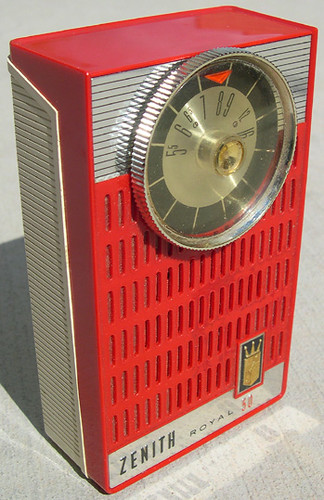
If anyone had a radio with them, it was a battery-powered transistor radio. These are some of the songs we probably heard (they were all chart-toppers in June of 1977):

  • I'm Your Boogie Man, by KC and the Sunshine Band
  • Sir Duke, by Stevie Wonder
  • Dreams, by Fleetwood Mac
  • Got To Give It Up, Part 1, by Marvin Gaye
  • Gonna Fly Now (theme from Rocky), by Bill Conti
Jimmy Carter was President of the United States, and no one is really sure how that happened. Billy Martin was manager of the New York Yankees - and he had not been fired even once.
Oh, and that was the summer that Star Wars hit theaters...not "Episode IV: A New Hope." Star Wars.
So, yes, this was a long time ago.
But so much of what we did at that summer camp resembles what the troop will do at summer camp this year. They will sleep in tents. They will earn merit badges, in diverse subjects like Swimming, Reptile Study, Canoeing, First Aid, Horsemanship. They will swim. They will sweat. They will get bug bites. And they will take away memories that will last a lifetime.
There are some differences.
We put up our own tents, because the camp didn't have platform tents in those days. My patrol combined three baker tents into one big tent with a center pole that slept six to eight Scouts. Heavy canvas. No floor. You can see it in the background of the photo above. I remember one night a snake passed through the tent, and we were all grateful we were sleeping on cots.
Probably the biggest difference was that we cooked our own food. No dining hall. We brought our troop patrol boxes, the camp dropped our food at the campsite, and we cooked and ate three meals a day all week long.
At night we would run around with no flashlights, because the moonlight was so bright.
So much fun.

Postscript: That's me in the yellow cap in the picture above. I don't remember why I was standing like a flamingo. My dad took this lunchtime photo in the middle of summer camp 1977. We were the Cobra Patrol. In the back left was Brian Jolly. Drinking milk was David Haunschild. Jeff Culbert was in front in the blue jeans (bell bottoms). Back then, our shorts were short, but our socks were long. And it was considered OK for boys to wear tank tops back then. There were other guys in the patrol who aren't in the picture - which is sad, because I don't remember who they were.

Wednesday, June 22, 2011

Summer Solstice


Matthew Weems sighed heavily while shifting his weight from one foot to the other. The task before him was a grim one, but it was one that he knew he must face. Rituals such as these were to be taken seriously. His upbringing taught him that. Likewise, his upbringing, in the form of a domineering but well-meaning father, led him to maintain a sense of calm in situations like these. After all, it had to be done, so why lash out? Clearly, others were present who did not share Matthew’s equanimity, their curses filling the air around him.

Life was to be savored, at least in moderate doses, but one must not omit, forget, or otherwise neglect those unpleasant obligations that are always a part of the package. Matthew knew this, not instinctively, but as a learned behavior, the sound of his father’s voice in the back of his head. Others might shirk their responsibilities, but the thought of such a serious misstep made Matthew gag a little. He would do his duty, and it would feel good when he was finished.

“Number 75! Number 75! You are next!”

Matthew jumped at the sound of the loud voice, then looked down at the slip of paper in his left hand.

93. It wouldn’t be much longer now.

Matthew Weems sighed heavily while shifting his weight from one foot to the other.

###

Postscript: What the hell was that? Excellent question. The text above is an attempt at Flash Fiction, directed, in particular, to the Three Word Wednesday blog.

Tuesday, June 21, 2011

Did I Ever Tell You About the Time...

...I Jumped Out of an Airplane?
The flyers appeared all over the campus of Oklahoma State University on a sunny spring day in 1985. Come learn about skydiving! We were in college to learn, weren't we? Four friends and I went to the lecture, which turned into a commercial for a group called Sky Dive Chandler.
What did we learn? That we, too, could jump out of a perfectly good airplane for $20 that weekend. All we had to do was find the tiny airport in Chandler, Oklahoma. And bring $20. And sign a waiver. I think the only question anyone asked was whether or not we could drink beer (that would be No).
The Chandler airport consisted of a rusting Quonset hut hanger and one short runway. There must have been 40 of us there, mostly college-aged men. We learned how to pack a parachute - though we didn't have to pack our own. We learned about the harness, and how to wear it properly. We learned where the freaking ripcord was located, and how to pull it.
After an hour of rudimentary instruction, conducted by the same young Sky Dive Chandler club members we met on campus, everyone filed out of the hangar onto the tarmac.
There sat a dirty red and white Cessna.
"Where's the plane we're going to jump out of?" someone asked. "All I see is this little red piece of shit."
I reasoned that if they used a really nice airplane, no one would want to jump out of it.
I don't remember how they decided the order in which we would jump. I do remember that we could only go one at a time, and that we spent all day standing around waiting. With no beer.
During the third or fourth flight of the day, before the next sky diver jumped, we watched the plane suddenly fly in a tight circle over the airport, over and over and over. None of us knew why this was happening, and in due course the plane straightened out and disgorged its human cargo. When the plane landed, we learned that it had caught fire, and the pilot circled until the fire blew out.
Oh, OK.
A few people left after that, but the hearty (stupid) ones stayed.
My turn came just as the sun was setting. My sky dive would be a night-time experience.
With my harness in place and the parachute on my back, I climbed inside the small airplane. The instructor who was already on board was busy trying to light a joint as I settled into my seat. We began to taxi down the runway, and as we picked up speed, the pilot began to thump one of the cockpit dials with one hand.
"Ah, there we go!" he cried, and suddenly we were in the sky.
I don't remember what the altitude was when the instructor said, "OK, buddy. Out you go!" I do remember suddenly regretting every choice I had made that led to that moment.
Proper procedure dictated that you step out onto the landing gear or wheel on the right side of the plane, and hold onto the strut under the wing. Then, you let go of the strut, and off you went.
I can tell you that letting go of that strut is the hardest thing I've ever done in my life. My handprints are probably still on that strut - assuming they haven't crushed that airplane into a cube by now.
But I did it, eventually, and began to free fall.
When sky diving is depicted on television or the movies, free-falling looks like flying or floating.
No. You are plummeting like a rock.
"AAAAAAAAAAAAAAAAAAHHHHHHHHHHHHHHHHHHHHHHHHHHHHHH!" is what I remember saying as I experienced free fall.
Then the ripcord was pulled...
...And I truly was floating. It was wonderful! My scrotum returned to its proper place below my abdomen, and I enjoyed a beautiful night-time view of the countryside as I wafted toward a grass field next to the runway. In short order, I landed and fell to my knees.
Then I went home and had a beer. And vowed to never again jump out of a perfectly good airplane.
Postscript: My good friend Jeff Darlington took the photo of me just after I got inside the plane. You can see the terror in my eyes. It's good that you can't read my lips.

Wednesday, June 15, 2011

Mendacity

“I would prefer that you grip the thread gently between your thumb and index finger,” the seamstress said sternly. “If we’re going to do this, we’re going to do it properly.” She was right, of course. I tried my best to relax, and closed my eyes to visualize the thread piercing the eye of the needle.
There.
“Excellent,” the seamstress hissed. “You may begin.”

###

Postscript: What the hell was that? Excellent question. The text above is an attempt at Flash Fiction, directed, in particular, to the Three Word Wednesday blog.

Tuesday, June 14, 2011

Happy Flag Day

In honor of Flag Day, here's a photo I took in 2009 at the Oklahoma United Methodist Circle of Care's annual Boys Ranch Rodeo...

Sunday, June 12, 2011

Now There Was a Coach...

As I watch the field take shape for the College World Series, it's easy to see what this year's NCAA baseball championship tournament will have in common with the last 11: Oklahoma State is once again watching at home.
If you were an Oklahoma State baseball fan in the 1980s and early '90s, you thought it would last forever.
The conference titles. The College World Series appearances. The domination.

Sigh. Now look at them.

Under the leadership of the comatose Frank Anderson, the Cowboys have consistently squandered talent and underwhelmed their fans. Following a shocking Big 12 Tournament championship in his first season (2004), Anderson has managed to put more distance between the team and its glory years.

The Gary Ward Era
Gary Ward came to OSU in 1978 from the Arizona junior college circuit. He immediately transformed a moribund also-ran into the dominant baseball team in the old Big 8. The numbers speak for themselves:
  • 16 straight Big 8 championships 1981-1996
  • 13 Top Ten finishes in final Baseball America poll (since 1981)
  • 10 College World Series appearances.
  • 3 appearances in the national championship game.
  • 953 wins against 313 losses. Oh, and one tie.
The Cowboys never broke through and won the College World Series under Ward (the school's lone national title in baseball came in 1959), but they were always relevant. They were always right there. Any serious discussion of college baseball in the 1980s had to include Oklahoma State.

Ward taught the science of hitting, producing All-Americans like Robin Ventura and Pete Incaviglia. But more than that, he taught attitude. The Cowboys swaggered. They carried themselves like champions. Incaviglia would warm up in the on-deck circle by swinging a sledgehammer.

Nowhere was that attitude more in evidence than in the Big 8 Tournament, which the Cowboys owned for 16 consecutive years. In some years, it looked like the Cowboys run might come to an end, at the hands of the Oklahoma Sooners or an upstart Kansas team. But the Cowboys always came through in the end, staving off all challenges in the double-elimination tournament.

That success never translated fully to Omaha and the CWS. Ward's two best teams fell short in the final game to Stanford (and Jack McDowell) in 1987 and Georgia in 1990. Pitching usually let down the Cowboys in Omaha, and indeed, was always the team's Achilles' heel in the Ward era.

After making one last run to Omaha in 1996, Ward announced his retirement. He blamed a chronic back ailment, but in truth, lack of support from the OSU athletic department at the dawn of the Big 12 conference era pushed Ward out the door.

So naturally, they hired Tom Holliday, Ward's longtime pitching coach, to replace him. The same Holliday who was reponsible for the pitching that never measured up to the offense. Holliday made one trip to Omaha, and then was fired after seven mostly-underwhelming seasons.

The funny thing is, Holliday had more success than Frank Anderson. Anderson, however, soldiers on with the support of the athletic department. And Cowboy fans are left with memories of the days when they had a real baseball coach.

Postscript: I took this photo of Gary Ward during the Big 8 Tournament at old All Sports Stadium in Oklahoma City during the late 1980s. I believe he was threatening to make the shortstop walk home if he made another error (kidding). Baseball uniform buffs will note the sans-a-belt pants look, along with the pullover jersey. Those were great uniforms with "Oklahoma" in block lettering and "State" on the black baseball bat underneath. They frequently wore orange or black jerseys with the white pants. And black stirrups, by God.

Next time: More fun with black and white photography...

Thursday, June 09, 2011

The Case of the Missing Lips

El  Reno, Oklahoma was more exciting for a newspaper reporter than one might think. There was the bar fight that ended with a guy impaled by a broken pool cue...the wife-swapping/child sex ring...the bank failures...the armed robber we dubbed "The Tenderizer."

But what really got the locals excited in the late '80s was the time Channel 4 came to town to broadcast the news. It's a fairly common ratings stunt today, but I believe Channel 4 was the first Oklahoma City station to do it. For a week, they visited a different small town each day and broadcast the 10 p.m. news (and 6 p.m. too, I think). 
As a self-important young newspaper reporter, I looked down on the so-called journalists who worked in television. We who wrote for daily papers were the real deal, and the TV people were "personalities" and little more.
Let me give you an example of why we thought this way. 
In 1986, the nationwide savings and loan crisis was just budding, and El Reno turned out to be the scene of one of the very early bank failures. One afternoon, we got word in the newsroom that First National Bank of El Reno was about to be closed (the town's S&Ls failed the next year). This was big news - bank failures were the kind of thing we associated with the Great Depression, and now we had one in our own backyard!
I grabbed a camera and a notepad, and headed for the bank, which was only a block away from our office. Sure enough, the doors to the bank were locked, and a letter from the FDIC was posted, saying that the bank had been taken over by regulators.
As the news spread, people came and stood on the sidewalks. They thought they should be there to witness the spectacle (and nobody really knew what would happen). Soon, the TV newspeople from Oklahoma City arrived. No satellite trucks back then, just camera people and the on-air talent.
I stood in the alley behind the bank with the TV people, and a guy from the Oklahoman, for hours waiting for an announcement...or something from inside the bank.
Finally, at nearly 9 p.m., a bank-regulator-guy emerged from First National to make the official announcement. Due to a preponderance of bad loans, First National had failed, and its good assets were being sold to a bank from Lawton, Oklahoma. It would re-open the next day under the new name, blah blah blah. It was an important story, but a boring one.
We asked a few questions, and received canned, non-informative responses. Then, as the bank-regulator-guy was about to go back inside, one of the TV reporters spoke up.
"Uh, I was down the street having dinner and missed your announcement. Could you run through all that again?"
The TV reporter was, truly, a moron. And so I tarred them all with the same brush in my mind.
Fast forward to the next year, and the traveling circus that was Channel 4 came to town. People were very excited. At the newspaper, we chose not to interview the on-air talent. I mean, why would you?
I did, however, take pictures as they broadcast the 10 p.m. news from the Canadian County Historical Society museum. Located in the old train depot, the museum provided a great backdrop for the news - but the stage lights made the place unbearably hot.
In the picture above, co-anchors Jerry Adams and Linda Cavanaugh appear to have shown up on-set without their lips. But they have people for that, so it's OK.
Adams went on to piss away his career and was the subject of a few police mugshots. Cavanaugh is still the co-anchor at Channel 4. Who knows how many sets of lips she's gone through since that night in El Reno?
Postscript: I took this picture using natural lighting. They didn't allow me to use a flash during the broadcast.
Next time: Remembering a real baseball coach.